Designing Ads that respect users and drive engagment
OVERVIEW
At The Washington Post, I collaborated with product managers and engineers to modernize our ad experience across editorial products. The goal was to create formats that respected user attention, improved performance, and adapted to new privacy standards.
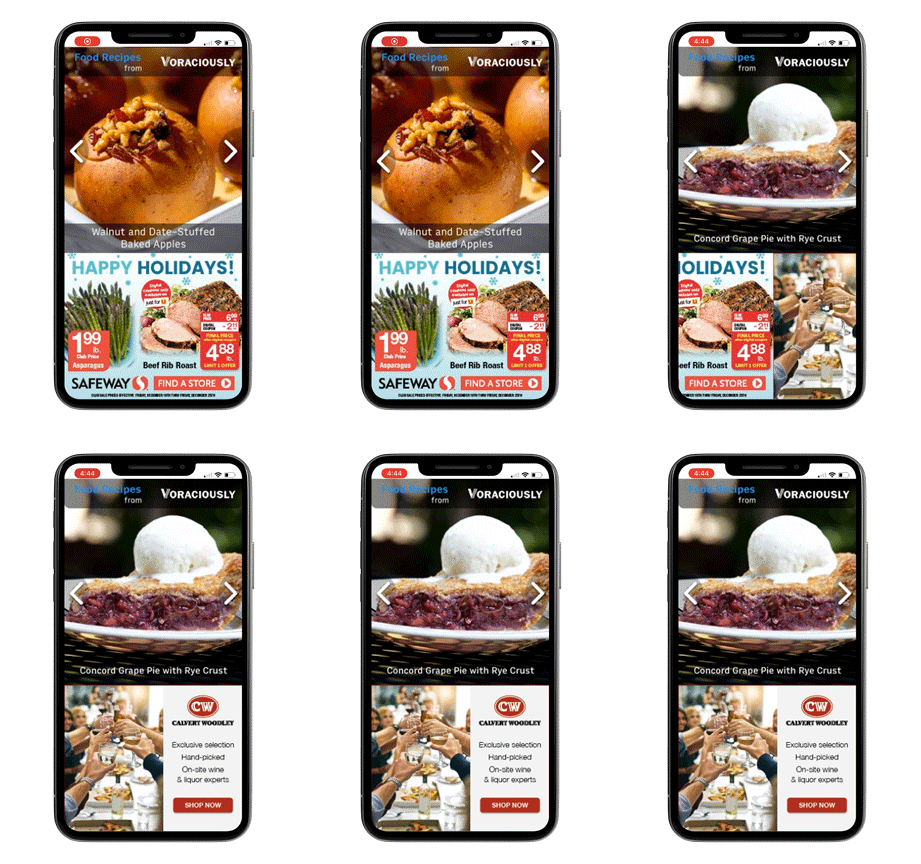
Below is one of those initiatives, Project Reel, a dynamic ad unit designed to increase engagement while reducing costs for advertisers.
Problem and COntext
As third-party cookies began to phase out, publishers faced a growing challenge: how to sustain ad revenue while maintaining trust and user experience. Our goal was to design new ad formats that could deliver performance without relying on invasive data tracking.
Objective: Create a lightweight, engaging ad experience that gives small and medium businesses affordable visibility while aligning with evolving privacy regulations.
Process overview
Stakeholder Interviews, Privacy Review, UX Audits
Wireframes, Component Mapping, Interaction Prototyping
Usability Testing, Feedback Loops
Key Insights
- Cost Barrier: Small and medium advertisers were priced out of high-impact formats.
- Performance Gap: Premium ad units delivered strong engagement but limited inventory.
- Editorial Alignment: Editorial teams wanted flexibility to feature content-aligned ads.
- Audience fatigue: Users were increasingly fatigued by repetitive, irrelevant banners.
Design Challenge: How might we create a scalable ad format that keeps impressions high, reduces cost, and integrates seamlessly with editorial content?
USERFLOWS & Interactions
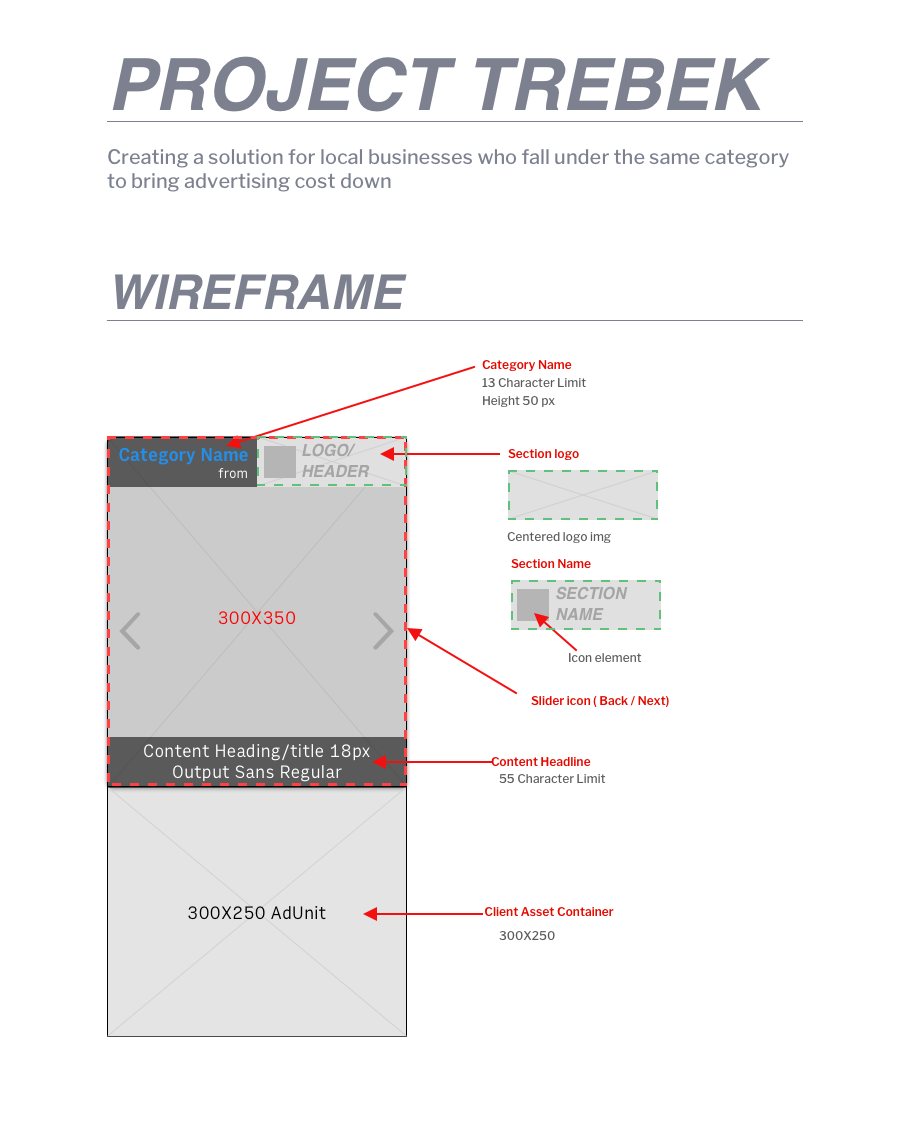
Project Trebek
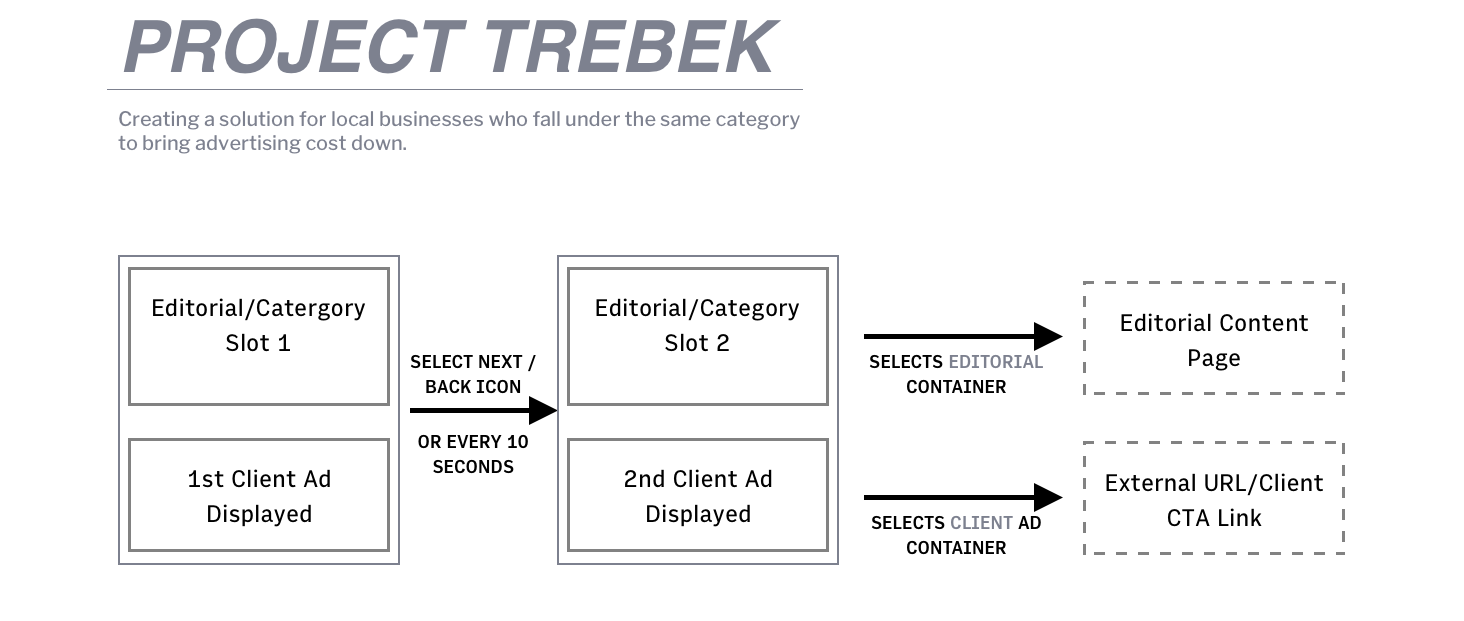
A flexible ad system that rotates multiple client ads within a single placement—balancing content and monetization in one flow.
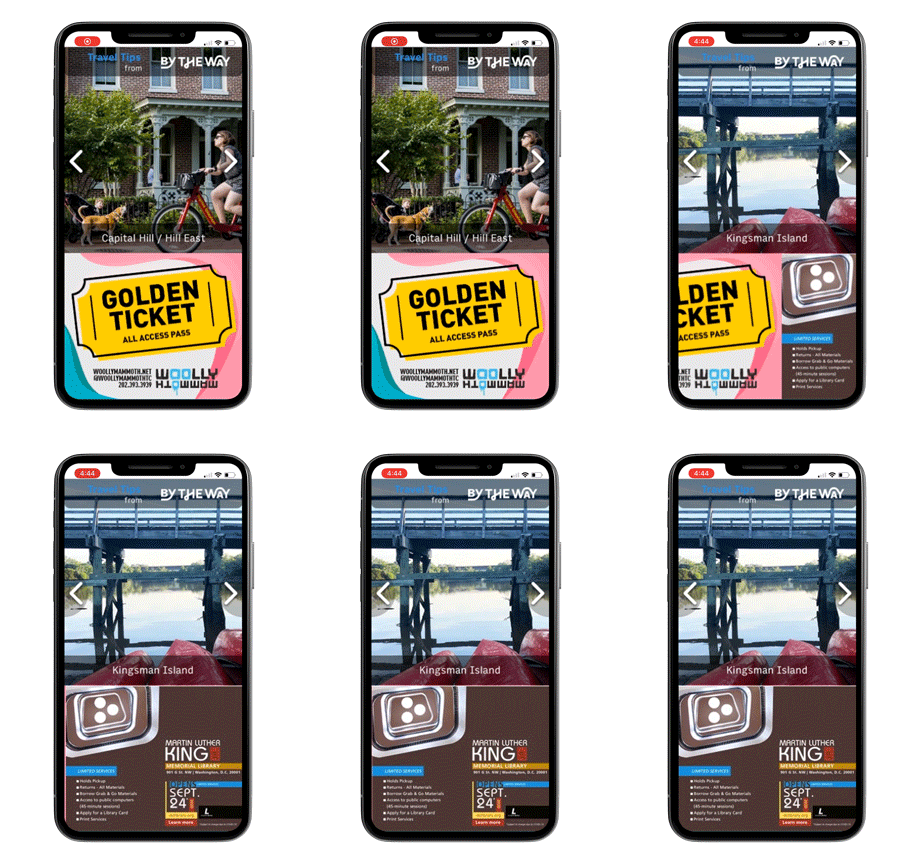
I mapped out the ad flow to explore how multiple advertisers could share a single ad unit without feeling intrusive. Each rotation balanced editorial content and ad content, giving users a sense of variety while keeping engagement high. The flow allowed:
- Ads and editorial content to appear in the same visual rhythm
- Users to interact manually (tap/scroll) or passively (auto-rotate every 10s)
- Advertisers to share a single unit’s cost while maintaining visibility
This approach helped reduce ad fatigue and created an interaction model users actually engaged with.
Design Exploration
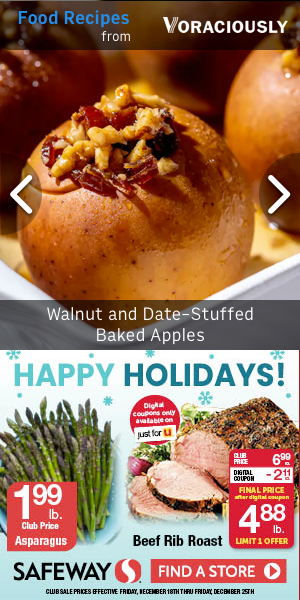
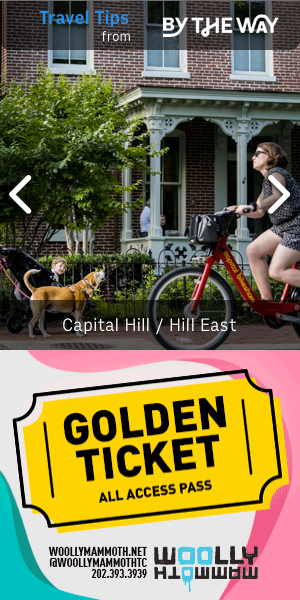
Using Sketch, I designed a modular layout that could be reused across verticals like Real Estate, Food, and Travel. Each element was componentized to make updates faster and ensure a consistent brand experience.
- Non-intrusive interaction: 300x250 ad container with minimal distractions
- Editorial context: category labels and content titles connected ad relevance to content
- Simple navigation: slider arrows for easy ad rotation
This modular structure reduced development time for new formats by roughly 30% and simplified cross-team collaboration.
Outcomes and Reflections
Outcome: The design introduced a scalable ad format later adopted by multiple verticals at The Washington Post, bridging editorial and advertising goals.
What I learned: Designing for monetization doesn’t mean sacrificing experience. By treating ads as part of the content ecosystem rather than interruptions, we built trust while still meeting revenue goals.